

Search
Enter keywords to search for products, blog posts, and more.
Enter keywords to search for products, blog posts, and more.
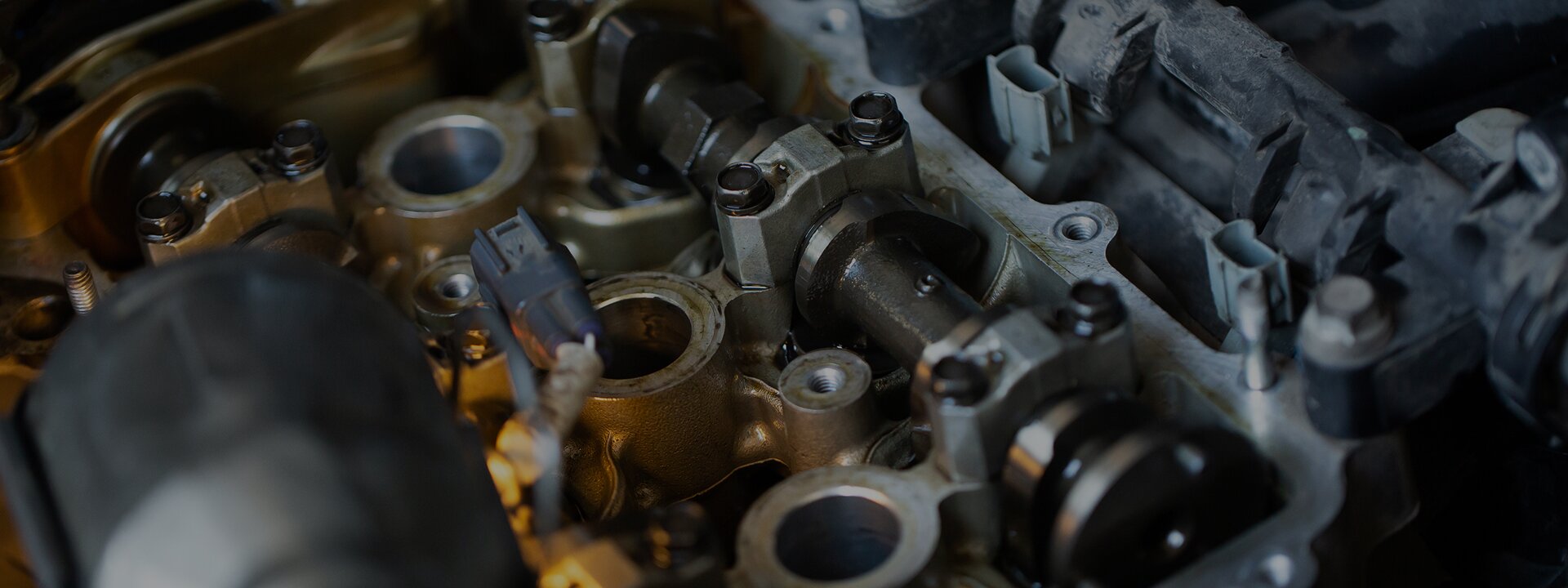
We have long provided OEM cylinder head services to many motorcycle brands, covering the entire process from die-casting, CNC to inspection. We have stable batch delivery capability, mature displacement platform experience, and reliable product consistency.
Home > Motorcycle Cylinder Head


Feiya's cylinder head manufacturing capabilities are based on mature aluminum die-casting systems, stable displacement platform development experience, and controllable CNC machining processes, and are suitable for long-term batch supply and platform-based structural parts projects. We emphasize batch consistency, structural integrity, and stable adaptability to the assembly requirements of the engine manufacturers.
· Stable displacement platform experience
· Controlled die casting and machining rhythm
· Reliable batch consistency
· Adapt to the structural requirements of multiple industries

Melting and composition control

High-pressure / low-pressure die casting

Deburring and preliminary cleaning

CNC machining of key dimensions

Heat treatment / aging treatment

Final inspection and airtightness test

Multiple structural adaptation

Multi-displacement platform coverage

Experience with multiple cooling methods

Understanding key parameters and size chain

Mold and process structure capabilities

Materials and internal quality control

Critical dimension management

Material consistency

Airtightness testing

Wall thickness monitoring

Data archiving

Assembly surface inspection

Standard packaging method

Clear batch labeling

Controllable lead time

Strong export experience

Quick response to changes

Safe transport
Over the years, we have provided long-term and stable cylinder head OEM manufacturing services to many motorcycle brands (including listed companies), and have become the largest motorcycle cylinder head manufacturer in Yueqing City, China.


Feiya is a seasoned OEM manufacturer with 17 years of expertise in aluminum die casting. While renowned for our multi-platform motorcycle cylinder heads, our capabilities extend to automotive structural parts and precision fuel dispenser components. We provide complete end-to-end support—from mold development and high/low-pressure die casting to complex CNC machining and rigorous testing—delivering ready-to-assemble solutions for diverse industries.

Operating within a 17,000+ m² facility, Feiya integrates the complete aluminum manufacturing cycle—from in-house mold design and die casting (HPDC & LPDC) to precision CNC machining. Equipped with over 30 advanced casting units and 125+ CNC centers, we maintain an annual capacity exceeding 5,000 tons. This vertical integration allows us to strictly control production timelines and guarantee stable, scalable supply for your critical OEM projects.

Quality is the core of our operations. Feiya is ISO 9001 certified and recognized as a National High-Tech Enterprise and a Technology-Based SME in Zhejiang. We adhere to rigorous quality management systems to monitor every process, from raw material inspection to final tolerance checks. These credentials reflect our commitment to technical innovation and prove our reliability as a trusted partner for global automotive and industrial clients.
Feiya can mass-produce multiple platforms such as 125, 150, 250V, 300V, 450V, 500V4, 650V, 700, 800V, and 1000V, and can carry out customized development and trial production based on customer drawings.
The cycle depends on mold development, trial stability, and batch quantity. Normally, new projects take about 35–50 days from mold design to first sample delivery, and the mass production cycle is controllable according to the production schedule.
Most cylinder heads use aluminum alloys such as ADC12, A356, etc. Based on displacement, structure, and heat dissipation requirements, the material will undergo corresponding melting control and heat treatment.
It is mainly evaluated through size chain control, CMM inspection, airtightness testing, and key wall-thickness measurement. Feiya keeps batch records to help customers track changes and conduct long-term verification.
A motorcycle cylinder head is one of the most important structural parts of an engine. It houses the combustion chamber, valve mechanism, cooling system, and oil passages. It directly affects compression ratio, heat dissipation efficiency, and power output. It is typically produced by aluminum alloy die casting and finished by CNC machining for all key dimensions.
The usual manufacturing process includes: Molten aluminum melting and composition control → high-pressure or low-pressure die casting → burr removal → CNC machining of key dimensions (such as combustion chamber, sealing surface, screw hole) → heat treatment and aging → airtightness testing → final inspection and packaging. Mold structure, fixturing, position accuracy, and internal quality requirements are the main technical challenges.