

Search
Enter keywords to search for products, blog posts, and more.
Enter keywords to search for products, blog posts, and more.
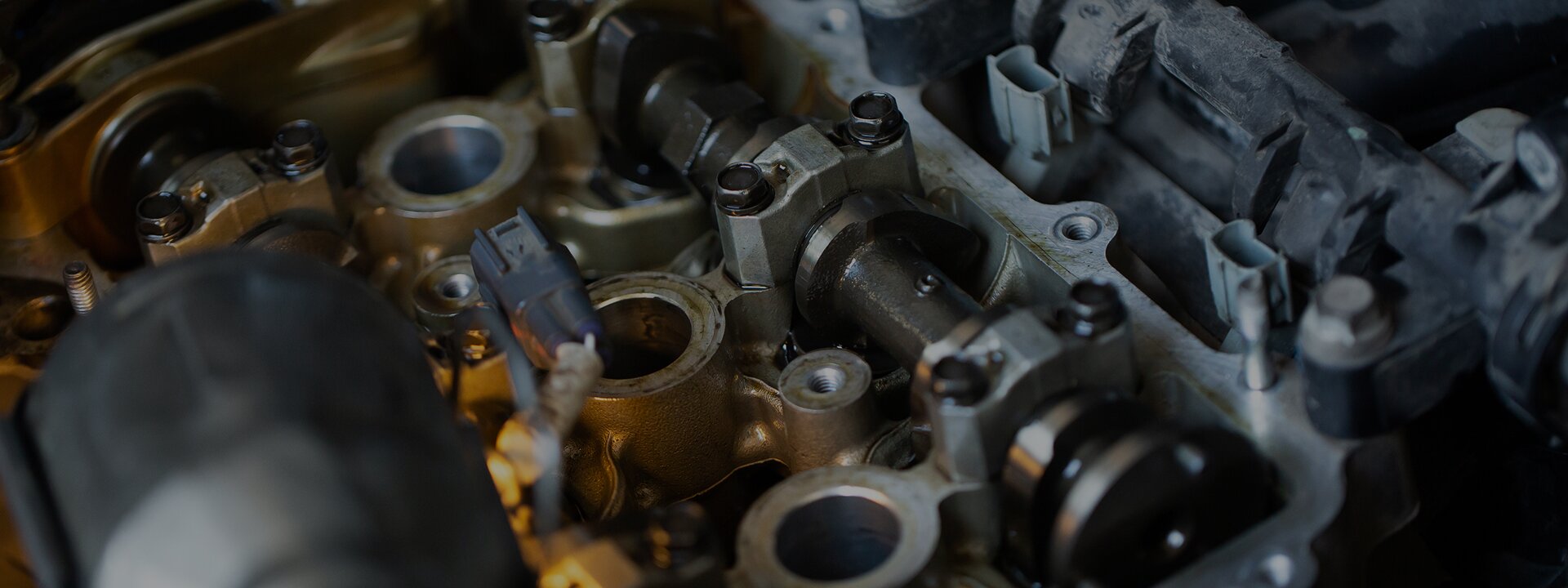
Feiya is an aluminum alloy casting manufacturer specializing in the production of motorbike engine cover. With more than 16 years of OEM experience, we provide end-to-end manufacturing solutions, from internal mold design and high-pressure casting to precision CNC machining and surface finishing
Home > Motorcycle Engine Cover


Feiya Machinery provides high-precision OEM motorcycle engine covers tailored to your exact technical specifications. Using our advanced aluminum die casting and CNC machining capabilities, we ensure that every crankcase, clutch head and cylinder head head cover meets strict airtightness, structural strength and surface finish standards. Explore our detailed manufacturing parameters below to learn how we can support your bike engine cover:
| Specification Item | Feiya Manufacturing Standard & Capabilities |
| Material Options | Aluminum Alloys:ADC12, A356, ZL111, ZL101 (Custom alloy composition available based on heat dissipation & strength requirements) |
| Casting Processes | High-Pressure Die Casting (HPDC):For thin-wall side covers & cosmetic parts Low-Pressure Die Casting (LPDC):For complex, heavy-duty structural housings |
| Precision Machining | 125 CNC Machining Centers Focus on critical sealing surfaces, bearing bores, and complex bolt patterns to ensure zero leakage and perfect assembly fit. |
| Surface Treatment | Shot Blasting & Vibratory Finishing:To remove burrs and create a uniform matte finish. Heat Treatment:T5/T6 Aging treatment to enhance hardness and structural stability. |
| Quality Assurance | 100% Leak Testing (Airtightness):Rigorous testing for oil/water passages. CMM Inspection:Precise dimensional verification of geometric tolerances. 9999 Material Analysis:Spectrometer testing for every batch. 10101010 |
| Engineering Support | In-House Tooling:Full DFM (Design for Manufacturing) and Mold Flow Analysis to optimize gate locations and minimize porosity. |
| Production Capacity | Scalable OEM Volume:Annual casting capacity of 5,000+ tons with flexible scheduling for batch orders. |

Step 1: Mold design and simulation

Step 2: Material melting and verification

Step 3: High/Low Pressure Casting

Step 4: De-gating & Shot Blasting

Step 5: Heat Treatment

Step 6: precision CNC machining

Step 7: Leak Test and Final Inspection
Over the years, we have provided long-term and stable cylinder head OEM manufacturing services to many motorcycle brands (including listed companies), and have become the largest motorcycle cylinder head manufacturer in Yueqing City, China.


Feiya is a seasoned OEM manufacturer with 17 years of expertise in aluminum die casting. While renowned for our multi-platform motorcycle cylinder heads, our capabilities extend to automotive structural parts and precision fuel dispenser components. We provide complete end-to-end support—from mold development and high/low-pressure die casting to complex CNC machining and rigorous testing—delivering ready-to-assemble solutions for diverse industries.

Operating within a 17,000+ m² facility, Feiya integrates the complete aluminum manufacturing cycle—from in-house mold design and die casting (HPDC & LPDC) to precision CNC machining. Equipped with over 30 advanced casting units and 125+ CNC centers, we maintain an annual capacity exceeding 5,000 tons. This vertical integration allows us to strictly control production timelines and guarantee stable, scalable supply for your critical OEM projects.

Quality is the core of our operations. Feiya is ISO 9001 certified and recognized as a National High-Tech Enterprise and a Technology-Based SME in Zhejiang. We adhere to rigorous quality management systems to monitor every process, from raw material inspection to final tolerance checks. These credentials reflect our commitment to technical innovation and prove our reliability as a trusted partner for global automotive and industrial clients.
We mainly use high-performance aluminum alloys such as ADC12 and A356. The ADC12 is ideal for complex shapes such as side covers due to its excellent flow properties, while the A356 is the first choice for structural parts such as crankboxes that require excellent strength and elongation. We use a spectrometer to confirm the composition of each melt to ensure material stability.
Preventing leaks is the core standard we ensure. We control internal density through precise high or low pressure casting parameters. After casting, we perform precision CNC machining on the sealing surfaces and perform pneumatic leak tests on the oil passages and water passages to ensure zero leaks in the assembly.
For new OEM projects, the lead time from mold design to T1 sample delivery is typically 35-50 days. Once samples are approved, our capacity of 5000 tons per year allows us to adjust mass production plans to meet your specific delivery deadlines
Our process includes Shot Blasting and vibration deburring to achieve a clean, matte appearance. At the same time, we can also prepare powder coated or painted surfaces based on the aesthetic requirements of your brand.
Not all engine cover processes are the same. At Feiya, we match the process to the function of the parts.
High Pressure Die Casting (HPDC): We recommend it for thin-walled side covers where surface polishing and production cycle speed are critical. Our HPDC machines can immediately fill complex cavities with high injection speeds, ensuring clear details and dense skin layers.
Low Pressure Casting (LPDC): Our LPDC machines are the best choice for heavy crankcase shells or structural covers that require a high degree of internal integrity. Controlled, bottom-up filling minimizes turbulence and air retention, significantly improving heat treatability and structural strength.
Choosing the right aluminum alloy is critical for thermal management and durability.
ADC12 (Al-Si-Cu): The industry standard for most motorcycle engine hoods. Its excellent flow allows complex ribs and logos to be cast, while its size stability ensures tight tolerances after machining.
A356 (Al-Si-Mg): We specify A356 for parts under high mechanical stress. Its excellent elongation and corrosion resistance make it ideal for structural enclosures. We use a Spectro spectrometer to verify each melt, strictly control the Fe content, prevent sludge formation, and ensure optimal mechanical properties
The quality of the engine cover depends on its suitability. The mating surface between the cover and the engine block must be completely flat to maintain a seal under thermal expansion. At Feiya, we perform single face milling to eliminate clamping distortions. Flatness tolerances can often be maintained in the micron range and verified with a Hexagon coordinate measuring machine. This precision machining capability eliminates the need to use excessive liquid gaskets and prevents long-term oil leaks.