

Search
Enter keywords to search for products, blog posts, and more.
Enter keywords to search for products, blog posts, and more.
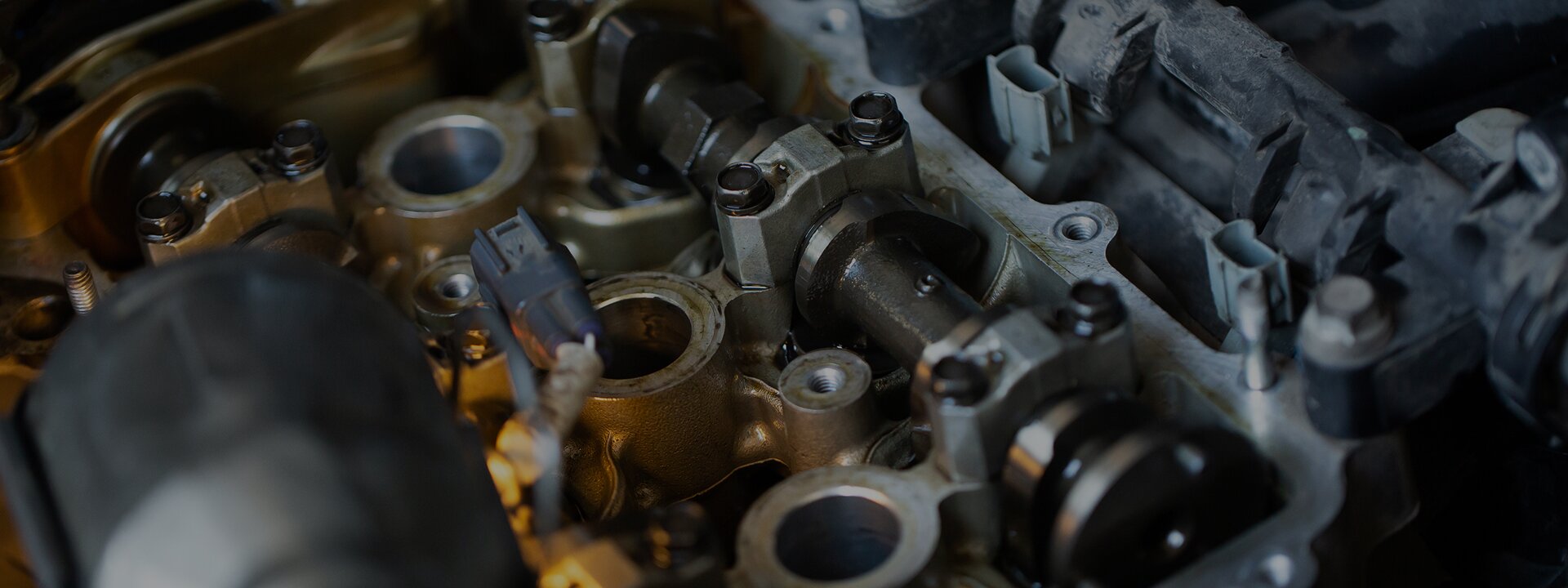
Feiya manufactures aftermarket cylinder heads compatible with the full range of Bajaj single-cylinder motorcycle engines. Bajaj's product line is entirely single-cylinder — from 99cc economy commuters to 220cc oil-cooled sport bikes — but spans three distinct ignition architectures that directly affect cylinder head design: conventional single-spark, DTS-i (Digital Twin Spark Ignition) with dual spark plug bosses, and Triple Spark with three plug bosses. Each aftermarket head is cast from A356 aluminum alloy (ASTM B108), T6 heat treated, and CNC machined to valve seat, spark plug boss, and combustion chamber dimensions within ±0.005 mm (±0.0002 in.) of original Bajaj specifications. Our production covers the Pulsar series (125 through 220), Pulsar NS naked sport range (NS 160 and NS 200), Discover commuter line (100cc through 150cc), and economy platforms including CT 100, Platina, and Boxer.
Home > Aftermarket Bajaj Cylinder Heads —Pulsar, Discover, NS & Commuter Platforms
Bajaj engines are designed for the specific demands of the South Asian and African motorcycle markets: extreme heat, dusty conditions, heavy passenger/cargo loading, and high daily mileage. The cylinder head must perform reliably under these conditions while accommodating Bajaj's proprietary DTS-i twin spark plug layout. The table below outlines Feiya's production capabilities for aftermarket Bajaj heads.
Customization Capabilities Table:
| Specification | Feiya Standard & Options | Bajaj Platform Relevance European operating environments. |
| Casting Material | A356 aluminum alloy (ASTM B108 / JIS AC4CH). Custom alloy compositions available. | A356 delivers the thermal fatigue resistance required for Bajaj engines operating in ambient temperatures exceeding 45°C in South Asian and African markets — conditions far more severe than typical Japanese or European operating environments. |
| Casting Process | Gravity casting and Low-Pressure Die Casting (LPDC). | Gravity casting is used for air-cooled Bajaj heads (Pulsar 150, Discover, CT 100, Platina, Boxer) — the majority of the product line. LPDC is used for the liquid-cooled NS 200, which requires water jacket integrity. |
| Heat Treatment | T6 (solution treatment + artificial aging). Temperature curves recorded and archived per batch. | Important for all Bajaj platforms, but especially for the oil-cooled Pulsar 220 and liquid-cooled NS 200, which sustain higher thermal loads than air-cooled commuter engines. |
| CNC Machining | 125+ machining centers: 3-axis, 4-axis, and 5-axis. Tolerances to ±0.005 mm (±0.0002 in.). | Critical for Bajaj DTS-i heads, which require two spark plug bosses positioned at opposite ends of the combustion chamber at approximately 90° to the valve axis. Triple Spark heads (NS 200) require three plug bosses with precise angular relationships. |
| DTS-i Spark Plug Boss Machining | Dual and triple spark plug boss geometry, with controlled approach angles, thread depth, and protrusion into combustion chamber. | Bajaj's patented DTS-i layout positions two plugs to create dual flame fronts that reduce flame travel distance by approximately 40%. Incorrect plug boss geometry will produce uneven combustion and negate the DTS-i efficiency advantage. |
| Valve Configuration Support | 2-valve (SOHC) and 4-valve (SOHC) configurations. | 2-valve heads cover the majority of the Bajaj lineup (Pulsar 150, Discover, CT 100, Platina, Boxer, V15). 4-valve heads are used on the Pulsar 135, NS 160, and NS 200 — Bajaj's performance-oriented platforms. |
| Surface Finish | Shot blasting, sandblasting, powder coating, or custom painting. Diamond-cut fin edges available. | All Bajaj engines except the NS 200 are air-cooled or oil-cooled with exposed cylinder heads. Fin depth, fin spacing, and surface finish directly affect thermal performance in the high-ambient-temperature markets where Bajaj motorcycles operate. |
| Quality Control | CMM dimensional inspection, 100% leak/pressure testing (liquid-cooled heads), spectrometer material verification. | Spark plug boss position and depth are verified by CMM on every DTS-i and Triple Spark head. Water jacket leak testing is mandatory for NS 200 liquid-cooled heads. |
| Assembly Options | Bare head (casting + machining only) or fully assembled (valves, springs, retainers, stem seals installed). | Bare heads suit engine rebuilders. Assembled heads provide drop-in convenience for Bajaj authorized service centers and independent workshops across India, Southeast Asia, and Africa. |
Every Bajaj motorcycle engine is a single-cylinder configuration. The key differentiator between platforms is not cylinder count but ignition architecture (single spark vs. DTS-i vs. Triple Spark), valve count (2-valve vs. 4-valve), and cooling method (air-cooled vs. oil-cooled vs. liquid-cooled). Our compatibility guide is organized by product family and performance tier..

The highest-performance tier in the Bajaj lineup. NS-series engines use 4-valve SOHC heads with advanced ignition systems and higher-quality cooling — producing more power per cc than any other Bajaj platform. These heads are the most technically demanding to manufacture in the aftermarket.
Pulsar NS 200 (199.5cc, liquid-cooled, 4-valve SOHC, Triple Spark ignition):
• The only liquid-cooled engine in Bajaj's current motorcycle lineup. The NS 200 head features three spark plug bosses — Bajaj's Triple Spark technology — and a water jacket requiring pressure-tested leak-free casting. This is the highest-demand Bajaj cylinder head platform in the aftermarket.
Pulsar NS 160 (160.3cc, oil-cooled, 4-valve SOHC, DTS-i):
• Oil-cooled variant with twin spark plug bosses and 4-valve breathing. Shares the NS-series chassis architecture but uses a simpler cooling strategy than the NS 200.
OEM Cross-Reference Part Numbers:
DJ201176, JZ401012, JY511139 — include these as cross-reference identifiers in distributor catalogs.

The core of Bajaj's sport commuter lineup and the highest-volume aftermarket segment by total search demand. These engines use 2-valve SOHC heads with DTS-i dual spark plug bosses.
Pulsar 150 (149cc, air-cooled, 2-valve SOHC, DTS-i):
• The highest-demand Bajaj cylinder head in the aftermarket. The Pulsar 150 has been in continuous production since 2001, creating an enormous installed base across India, Southeast Asia, Africa, and Latin America. The head is a straightforward air-cooled 2-valve casting with dual DTS-i spark plug bosses and deep cooling fins.
Pulsar 180 (178.6cc, air-cooled, 2-valve SOHC, DTS-i):
• Larger-displacement variant sharing the Pulsar 150’s basic head architecture with increased port sizing and combustion chamber volume.
Pulsar 220 / 220F (220cc, oil-cooled, 2-valve SOHC, DTS-i):
• Bajaj's flagship sport model prior to the NS series. The Pulsar 220 uses an oil-cooled head — the cooling oil gallery adds complexity to the casting compared to the purely air-cooled Pulsar 150.
Pulsar 125 (124.4cc, air-cooled, 2-valve SOHC, DTS-i):
• Entry-level Pulsar platform. "Pulsar 125 head price".
Pulsar 135 / 135 LS (134.6cc, air-cooled, 4-valve SOHC):
• An exception in the Pulsar sport range — the 135 uses a 4-valve head, which differentiates its casting from the 2-valve Pulsar 125/150/180.
OEM Cross-Reference Part Number:
• 36DS1001.

Bajaj's workhorse commuter lineup, optimized for fuel economy and low maintenance cost. These engines use simple air-cooled 2-valve heads with DTS-i twin spark plug bosses. The Discover series represents Bajaj's volume play in the 100–150cc commuter segment across India and export markets.
Discover 125 (124.6cc, air-cooled, 2-valve, DTS-i):
• The highest-demand Discover model in the aftermarket. "Discover 125 head price".
Discover 100 (102cc, air-cooled, 2-valve):
• Entry-level Discover platform.
Discover 135 (134.6cc, air-cooled, 2-valve):
• Mid-range Discover variant.
Discover 150 (144.8cc, air-cooled, 2-valve):
• Largest-displacement Discover model.

The highest-volume, lowest-cost segment of Bajaj's motorcycle range. These engines prioritize manufacturing simplicity, fuel economy, and parts affordability above all else. Cylinder heads are air-cooled, 2-valve, and designed for maximum casting consistency at high production volumes.
CT 100 (99.27cc, air-cooled, 2-valve):
• Bajaj's entry-level economy motorcycle. "CT 100 head price".
Platina (102cc, air-cooled, 2-valve, DTS-i):
• Bajaj's comfort-oriented commuter. "Platina head price".
Boxer (100cc, air-cooled, 2-valve):
• Bajaj's utility motorcycle, primarily sold in African markets (Nigeria, Kenya, Uganda, Egypt). The Boxer is the best-selling motorcycle in several African countries. Its cylinder head must withstand extreme heat, dust ingestion, and heavy loading conditions typical of African commercial motorcycle (boda-boda/okada) use.

V15 (149.5cc, air-cooled, 2-valve, DTS-i):
• Bajaj's cruiser-style motorcycle. The V15 uses a Pulsar 150-derived engine with a different state of tune and DTS-i ignition.
Provide your Bajaj engine platform, required quantity, and whether you need bare castings or fully assembled heads. Include the OEM part number (e.g., DJ201176, JZ401012, 36DS1001) if available for faster cross-referencing. Our engineering team will respond within 24 hours with a detailed proposal covering material specification, machining tolerances, and production lead time.
Get a Quick QuoteBajaj engines operate under conditions that differ fundamentally from Japanese and European motorcycle platforms. Ambient temperatures in primary Bajaj markets — India, Nigeria, Bangladesh, Sri Lanka, the Philippines — routinely exceed 40°C. Engines carry two passengers plus cargo as standard practice. Dust ingestion is constant. These operating conditions impose specific requirements on the aftermarket cylinder head that go beyond simply replicating factory dimensions.

Reverse Engineering & DTS-i Geometry Capture

Gravity Casting & LPDC for Bajaj Platforms

T6 Heat Treatment with Batch Traceability

CNC Machining with DTS-i Plug Boss Verification

Quality Inspection & Testing
Over the years, we have provided long-term and stable cylinder head OEM manufacturing services to many motorcycle brands (including listed companies), and have become the largest motorcycle cylinder head manufacturer in Yueqing City, China.


Feiya is a seasoned OEM manufacturer with 17 years of expertise in aluminum die casting. While renowned for our multi-platform motorcycle cylinder heads, our capabilities extend to automotive structural parts and precision fuel dispenser components. We provide complete end-to-end support—from mold development and high/low-pressure die casting to complex CNC machining and rigorous testing—delivering ready-to-assemble solutions for diverse industries.

Operating within a 17,000+ m² facility, Feiya integrates the complete aluminum manufacturing cycle—from in-house mold design and die casting (HPDC & LPDC) to precision CNC machining. Equipped with over 30 advanced casting units and 125+ CNC centers, we maintain an annual capacity exceeding 5,000 tons. This vertical integration allows us to strictly control production timelines and guarantee stable, scalable supply for your critical OEM projects.

Quality is the core of our operations. Feiya is ISO 9001 certified and recognized as a National High-Tech Enterprise and a Technology-Based SME in Zhejiang. We adhere to rigorous quality management systems to monitor every process, from raw material inspection to final tolerance checks. These credentials reflect our commitment to technical innovation and prove our reliability as a trusted partner for global automotive and industrial clients.
For models in regular production — such as Pulsar 150, Discover 125, or CT 100 heads — we offer flexible minimum order quantities suited to regional distributors. Bajaj aftermarket head volumes are typically higher per order than Japanese brand equivalents because the average selling price per unit is lower and the replacement cycle is shorter in Bajaj’s primary markets. Contact us with your target model and estimated annual volume for a specific quote.
Most Bajaj models produced after 2003 use DTS-i heads with twin spark plug bosses. However, some early models and certain export-market variants use conventional single-spark heads. The Pulsar NS 200 uses Triple Spark technology with three plug bosses. Specify your exact model and production year when requesting a quote so we can confirm the correct spark plug boss configuration.
Yes. We maintain cross-reference data for Bajaj OEM part numbers including DJ201176, JZ401012, JY511139, JL401017, 36DS1001, and YPD02002. Provide the OEM part number when requesting a quote for fastest identification and pricing.
These are fundamentally different castings. The Pulsar 150 uses an air-cooled, 2-valve head with DTS-i twin spark plug bosses — a relatively simple casting with deep cooling fins. The NS 200 uses a liquid-cooled, 4-valve head with Triple Spark (three plug bosses) and an integrated water jacket. The NS 200 head is significantly more complex and requires LPDC casting and pressure-tested leak verification.
Bajaj’s three-wheeler engines share foundational architecture with their motorcycle platforms. Contact us with the specific three-wheeler engine model and OEM part number, and our engineering team will confirm compatibility and availability.
No. While both are air-cooled, 100cc, 2-valve single-cylinder engines, they use different castings with different combustion chamber geometry, port angles, and mounting dimensions. The Boxer is primarily an export model (African markets) with different tuning from the Indian-market CT 100. Specify the exact model when ordering.
Bajaj’s DTS-i (Digital Twin Spark Ignition) technology — patented in 2003 and now used across virtually the entire Bajaj lineup — positions two spark plugs at opposite ends of the combustion chamber, approximately 90° to the valve axis. When both plugs fire simultaneously, they create dual flame fronts that converge toward the center of the chamber. This reduces flame travel distance by approximately 40% compared to a single-plug design, resulting in faster and more complete combustion.
For aftermarket cylinder head manufacturing, the DTS-i layout imposes a machining challenge that does not exist on conventional single-spark heads. Each spark plug boss must be positioned, angled, and threaded with exact relationship to the combustion chamber geometry. If one plug boss is even slightly deeper or shallower than specified, the resulting flame front asymmetry produces uneven combustion pressure, increased vibration, and reduced fuel efficiency — defeating the core purpose of the DTS-i system.
On the Pulsar NS 200, this challenge is compounded by a third plug boss (Triple Spark). Three flame fronts must converge symmetrically, which requires even tighter positional tolerances between all three bosses. Our CNC machining program verifies all plug boss positions with CMM measurement on every production batch, treating DTS-i geometry as the primary critical dimension — ahead of valve seats and deck flatness.
Bajaj motorcycles operate primarily in markets where ambient temperatures routinely exceed 40°C: India (peak 48°C in Rajasthan), Nigeria (peak 43°C in the north), Bangladesh, Sri Lanka, and the Philippines. Most Bajaj engines are air-cooled, meaning the cylinder head fins are the primary mechanism for heat rejection.
In these high-ambient-temperature conditions, the thermal margin between normal operating temperature and the point of head gasket failure or valve seat recession is much narrower than in temperate-climate markets. A cylinder head fin design that performs adequately in a 25°C European or Japanese testing environment may be marginal at 45°C in Lagos or Chennai with a pillion passenger and cargo.
Our casting process addresses this by maintaining strict control over fin depth, fin spacing, and inter-fin wall thickness. Deeper fins with wider spacing improve convective surface area but reduce structural rigidity. Shallower fins with tighter spacing are stronger but trap heat between fins in low-airflow conditions. We reproduce the OEM fin geometry exactly rather than attempting to “improve” it — Bajaj has already optimized these dimensions for their target operating environments through decades of field data from the harshest motorcycle markets in the world.
The Bajaj aftermarket operates on fundamentally different economics than the Japanese brand aftermarket. A Pulsar 150 cylinder head retails for a fraction of what a Yamaha YZF-R1 or Suzuki Hayabusa head commands. But the volume is dramatically higher — there are more Bajaj Pulsar 150s in service worldwide than any single Japanese sportbike model. This means aftermarket Bajaj cylinder head manufacturing must prioritize batch consistency, low per-unit cost, and stable high-volume supply over exotic specifications. A Pulsar 150 head does not need 5-axis machining or titanium valves — it needs a reliable A356 casting with precise DTS-i plug boss geometry, clean valve seats, flat deck surfaces, and consistent dimensions across thousands of units per batch. Our production system is structured to deliver exactly this: high-volume gravity casting with controlled T6 heat treatment, 3-axis CNC machining for the primary features, and 100% CMM verification of the DTS-i plug boss positions that are most likely to cause field failures if out of tolerance.


