

Search
Enter keywords to search for products, blog posts, and more.
Enter keywords to search for products, blog posts, and more.
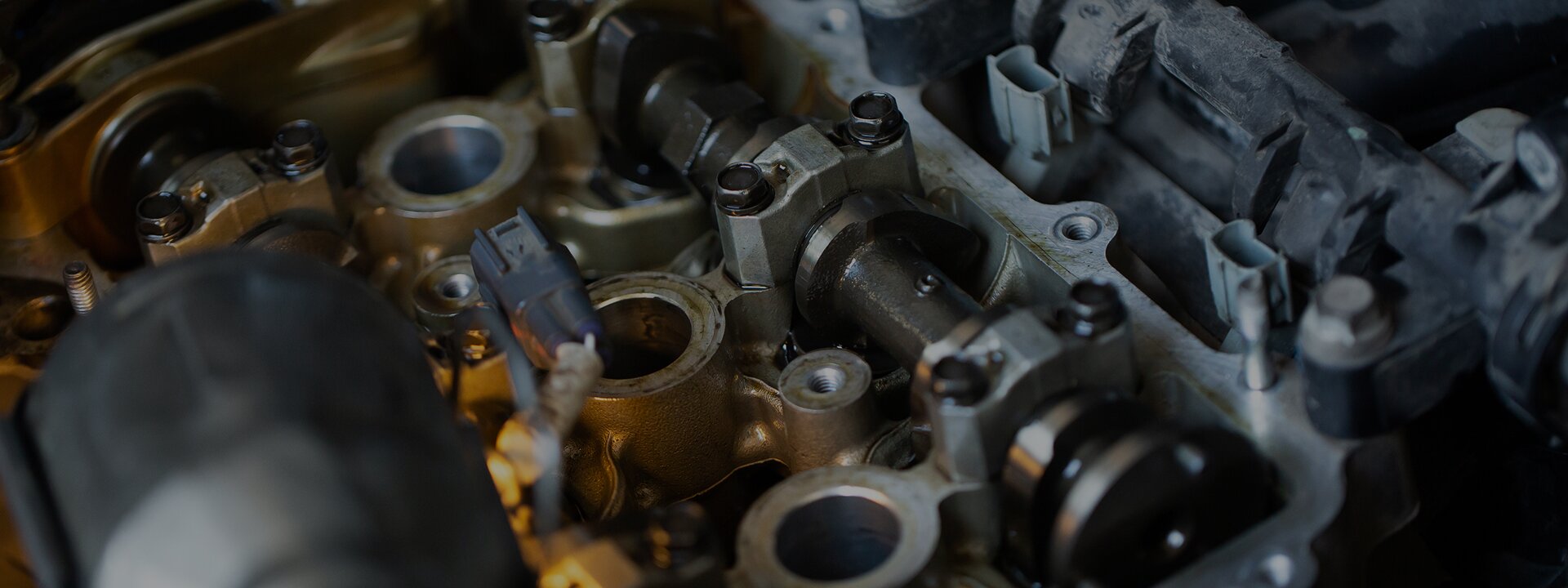
Feiya manufactures aftermarket cylinder heads compatible with Kawasaki motorcycle, ATV, and commercial small engine platforms. Each Kawasaki-compatible head is cast from A356 aluminum alloy (ASTM B108), T6 heat treated, and CNC machined to valve seat, camshaft journal, and combustion chamber dimensions within ±0.005 mm (±0.0002 in.) of original Kawasaki specifications. Kawasaki’s aftermarket cylinder head demand is concentrated heavily in off-road and motocross — the KX250F alone generates more aftermarket replacement demand than all other Kawasaki models combined. Our production covers the full range: KX-series motocross engines, KLX/KLR dual-sport platforms, KFX/Bayou ATV engines, ZX-series inline-4 sportbikes, and Kawasaki’s FR/FH/FX-series commercial V-twin engines used in zero-turn mowers, utility vehicles, and industrial equipment.
Home > Aftermarket Kawasaki Cylinder Heads — Motocross, Dual-Sport, ATV & Commercial Engine Platforms
The table below outlines Feiya’s standard manufacturing capabilities and customization options for aftermarket Kawasaki engine heads.
Customization Capabilities Table:
| Customization Parameter | Feiya Standard & Options | Kawasaki Platform Relevance |
| Casting Material | A356 aluminum alloy (ASTM B108 / JIS AC4CH). Custom alloy compositions available. | A356 provides the thermal fatigue resistance required across Kawasaki’s engine range, from air-cooled KX two-stroke motocross to liquid-cooled ZX-10R inline-4s running above 13,000 RPM. |
| Casting Process | Low-Pressure Die Casting (LPDC) and gravity casting. | LPDC is used for water-jacketed heads with complex internal passages (KX250F, KLR650, ZX series). Gravity casting suits simpler air-cooled platforms (KX two-strokes, KE100, Bayou utility ATVs). |
| Heat Treatment | T6 (solution treatment + artificial aging). Temperature curves recorded and archived per batch. | Essential for Kawasaki motocross engines (KX250F, KX450F) running 14.0:1 compression ratios, and KFX400/KFX450 sport ATVs subjected to sustained high-load off-road operation. |
| CNC Machining | 125+ machining centers: 3-axis, 4-axis, and 5-axis. Tolerances to ±0.005 mm (±0.0002 in.). | The KX250F’s four-valve DOHC head with its narrow included valve angle demands multi-axis machining for precise valve seat geometry. Kawasaki’s commercial V-twin heads (FR/FH series) require matched port geometry across both cylinders. |
| Two-Stroke Support | Dedicated 2-stroke cylinder head casting with squish band geometry control and dome profiling. | Direct support for Kawasaki KX65, KX80, KX85, KX100, KX125, KX250, and KX500 two-stroke motocross and youth platforms. |
| Surface Finish | Shot blasting, sandblasting, powder coating, or custom painting. Diamond-cut fin edges available. | Air-cooled Kawasaki heads (KX two-strokes, KE100, Bayou ATV) benefit from deep-fin casting. Commercial V-twin heads (FR/FH series) typically receive standard shot-blasted finish for OEM-appearance consistency. |
| Quality Control | CMM dimensional inspection, 100% leak/pressure testing, spectrometer material verification. | Water jacket integrity is verified on every unit — critical for liquid-cooled Kawasaki motocross (KX250F, KX450F), dual-sport (KLR650), and inline-4 (ZX-6R, ZX-10R, ZX-14) platforms. |
| Assembly Options | Bare head (casting + machining only) or fully assembled (valves, springs, retainers, stem seals installed). | Bare heads suit motocross rebuilders doing their own titanium or stainless steel valve conversions (common on KX250F). Assembled heads provide drop-in convenience for distributors and workshops. |
Feiya produces aftermarket Kawasaki engine heads and top-end castings compatible with motorcycle, ATV, and commercial engine platforms. Our casting and CNC machining processes deliver a direct bolt-on fit to original Kawasaki engine dimensions across all configurations listed below.


KX250F
The KX250F is the most widely replaced Kawasaki cylinder head in the global aftermarket. This DOHC 4-valve liquid-cooled engine runs a 14.0:1 compression ratio (2025 spec) and is subjected to extreme thermal cycling in motocross competition, making cylinder head replacement a routine maintenance item for race teams and serious amateur riders. Kawasaki co-developed the original KX250F engine with Suzuki under a joint venture starting in 2002 — the early KX250F (2004–2005) shares its architecture with the Suzuki RM-Z250. From 2006 onward, Kawasaki developed the KX250F independently, with significant head revisions across multiple generations. We maintain model-year-specific tooling for the following groupings:
• KX250F 2004–2005 (shared platform with Suzuki RM-Z250)
• KX250F 2006–2008 (Kawasaki-independent aluminum perimeter frame generation)
• KX250F 2009–2010 (revised head, new intake porting)
• KX250F 2011–2016 (DFI fuel injection generation, dual-injector from 2012)
• KX250F 2017–2019 (further DFI and combustion chamber revisions)
• KX250 2020+ (redesignated, updated bore/stroke and 14.0:1 compression)
Also available: aftermarket cylinder heads for the KX450F / KX450 (2006–present), covering all major model year revisions including the 2006–2008, 2009–2011, and 2012+ generations.
KX250F Cylinder Heads


KX125
Kawasaki’s two-stroke motocross lineage spans from youth mini bikes to the iconic KX500. These heads require precision squish band and dome profiling to maintain competition-level compression geometry. We produce aftermarket two-stroke cylinder heads for:
• Youth / Mini: KX60, KX65 — high-volume youth racing platforms
• Mid-Size: KX80, KX85, KX100 — junior motocross competition
• Full-Size: KX125, KX250 — the classic two-stroke race engines. The KX125 remains in strong aftermarket demand, driven by the enduring popularity of 125cc two-stroke racing
• Open Class: KX500 — Kawasaki’s legendary open-class two-stroke, supporting vintage and desert racing
Custom billet replacement heads with application-specific squish geometry are available for KX125 and KX250 competition builds.
KX125 Cylinder Heads


KLR650
Kawasaki’s dual-sport and trail bikes prioritize long-term durability over outright performance. The KLR650, in particular, has been in production since 1987 across three generations — creating an enormous installed base of aging engines worldwide. The KLR650’s DOHC 4-valve head operates at a moderate 9.5–9.8:1 compression ratio, but the engine’s longevity means many units now require head rebuilds after decades of accumulated mileage.
• KLR650 (Gen 1: 1987–2007, Gen 2: 2008–2018, Gen 3: 2022+): 652cc DOHC liquid-cooled single. Gen 3 added revised cam profiles and intake porting for improved low-end torque. We produce heads compatible with all three generations.
• KLX250: 249cc DOHC liquid-cooled single — a popular dual-sport platform in global markets.
• KLX110: 112cc air-cooled single — widely used as a pit bike and youth trail bike, with a strong aftermarket following in the mini-moto community.
• KLX125, KLX150, KLX300: Additional trail and dual-sport platforms with regional demand, particularly in Southeast Asian markets.
• KLR250: Earlier-generation lightweight dual-sport.
• KE100: Air-cooled two-stroke commuter/trail — vintage market.
KLR650 Cylinder Heads


ZX-6R
Kawasaki’s inline-4 sportbike heads are engineered for sustained high-RPM operation. they represent a technically demanding manufacturing segment due to their complex liquid cooling circuits, tight multi-valve geometry, and high compression ratios.
• ZX-6R (Ninja 636): 636cc DOHC 16-valve inline-4 supersport.
• ZX-10R (Ninja ZX-10R): 998cc DOHC 16-valve inline-4 — Kawasaki’s flagship superbike, 5-time WorldSBK champion platform.
• ZX-12R: 1,199cc inline-4 hypersport — discontinued but still active in the drag racing and performance community.
• ZX-14 (ZZR1400): 1,441cc inline-4 — Kawasaki’s ultimate sport-touring hyperbike.
Also available: aftermarket castings for the KZ1000 and Z1 — Kawasaki’s pioneering DOHC inline-4 engines from the 1970s, supporting the vintage restoration and classic racing market.
ZX-6R Cylinder Heads


650SX
• Ninja 250 (EX250): 248cc parallel twin — one of the best-selling entry-level sportbikes in history, with decades of production creating sustained aftermarket head demand.
• 650SX Jet Ski: Kawasaki’s 635cc two-stroke twin marine engine — a niche but real aftermarket segment for personal watercraft rebuilders.
650SX cylinder head

Kawasaki ATV engines share core architecture with their motorcycle counterparts. The KFX400 uses an engine closely related to the Suzuki LTZ400/DRZ400 platform — parts from this joint-venture era are often cross-compatible.
• Sport ATV: KFX400 (shares architecture with Suzuki LTZ400) and KFX450R — high-performance sport quad engines.
• Utility ATV: Bayou 220 and Bayou 300 — long-running utility quad platforms with an aging installed base now requiring aftermarket head replacements.
Provide your Kawasaki engine platform (motorcycle, ATV, or commercial engine model), required quantity, and whether you need bare castings or fully assembled heads. Our engineering team will respond within 24 hours with a detailed proposal covering material specification, machining tolerances, and production lead time.
Get a Quick QuoteKawasaki engines span an unusually broad range of applications — from 65cc youth motocross to 1,441cc hypersport inline-4s to 726cc commercial V-twin mower engines. Each application imposes different manufacturing requirements on the cylinder head. Here is how we address them.

Reverse Engineering & Dimensional Capture

Sand Core Development & Casting

T6 Heat Treatment with Batch Traceability

Multi-Axis CNC Machining

100% Leak Testing & CMM Final Inspection
Over the years, we have provided long-term and stable cylinder head OEM manufacturing services to many motorcycle brands (including listed companies), and have become the largest motorcycle cylinder head manufacturer in Yueqing City, China.


Feiya is a seasoned OEM manufacturer with 17 years of expertise in aluminum die casting. While renowned for our multi-platform motorcycle cylinder heads, our capabilities extend to automotive structural parts and precision fuel dispenser components. We provide complete end-to-end support—from mold development and high/low-pressure die casting to complex CNC machining and rigorous testing—delivering ready-to-assemble solutions for diverse industries.

Operating within a 17,000+ m² facility, Feiya integrates the complete aluminum manufacturing cycle—from in-house mold design and die casting (HPDC & LPDC) to precision CNC machining. Equipped with over 30 advanced casting units and 125+ CNC centers, we maintain an annual capacity exceeding 5,000 tons. This vertical integration allows us to strictly control production timelines and guarantee stable, scalable supply for your critical OEM projects.

Quality is the core of our operations. Feiya is ISO 9001 certified and recognized as a National High-Tech Enterprise and a Technology-Based SME in Zhejiang. We adhere to rigorous quality management systems to monitor every process, from raw material inspection to final tolerance checks. These credentials reflect our commitment to technical innovation and prove our reliability as a trusted partner for global automotive and industrial clients.
For models in regular production — such as KX250F, KLR650, or FR730V heads — we offer flexible minimum order quantities suited to regional distributors. For custom projects requiring new tooling, the MOQ depends on mold complexity and development cost. Contact us with your target model, model year range, and estimated annual volume for a specific quote.
Yes. The KX250F underwent significant cylinder head revisions across its production run. We maintain separate tooling for the 2004–2005 (shared RM-Z250 platform), 2006–2008, 2009–2010, 2011–2016 (DFI generation), 2017–2019, and 2020+ (redesignated KX250) generations. Specify your model year when requesting a quote.
The 2004–2005 KX250F and 2004–2006 RM-Z250 share the same engine architecture from the Kawasaki-Suzuki joint venture. Our heads for this generation are dimensionally compatible with both models. From 2006 onward, Kawasaki developed the KX250F independently and the heads are no longer interchangeable with the RM-Z250.
Yes. We produce aftermarket heads for Kawasaki’s FR, FH, FX, and FD commercial engine series. These heads are used in zero-turn mowers, riding mowers, and utility vehicles manufactured by John Deere, Husqvarna, Toro, Scag, Exmark, and others. Commercial engine heads are sold in matched V-twin pairs with verified cross-cylinder dimensional consistency.
Yes. We manufacture heads for Kawasaki’s KX-series two-stroke motocross engines: KX65, KX80, KX85, KX100, KX125, KX250, and KX500. These heads are produced with controlled dome profiling and squish band geometry. Custom billet replacement heads with modified squish geometry are also available for KX125 and KX250.
Yes. We regularly reverse-engineer obsolete components for the vintage, restoration, and classic racing markets. We have completed this process for platforms including the KZ1000, Z1, KX500, and early KLR650 Gen 1 heads. If you can supply a physical sample — even a damaged one — we can laser-scan it, reconstruct the 3D model, and develop new casting tooling.
The KX250F generates more aftermarket cylinder head replacement demand than all other Kawasaki models combined. Three factors drive this concentration.
First, the KX250F’s 14.0:1 compression ratio places exceptional thermal stress on the cylinder head. In motocross competition, the engine cycles between full throttle and engine braking hundreds of times per moto, creating rapid thermal expansion and contraction that fatigues the inter-valve bridge area — the thinnest, most stressed section of the casting.
Second, the KX250F has been in continuous production since 2004, with over 20 model years of accumulated racing inventory worldwide. These are not street bikes that sit in garages — they are competition machines that accumulate head damage as a normal consequence of race use.
Third, the KX250F uses titanium intake and exhaust valves from the factory. Titanium valves are lightweight and enable higher RPM, but they are less durable than steel or stainless steel alternatives. Valve failure, seat recession, and guide wear are the most common triggers for KX250F cylinder head replacement. Many rebuilders convert to stainless steel valves (Kibblewhite, KPMI) when rebuilding a KX250F head — our bare castings are designed to accept both OEM titanium and aftermarket stainless steel valve configurations.
Kawasaki is the only major Japanese motorcycle OEM that also manufactures a full line of commercial small engines. The FR, FH, FX, and FD V-twin series power zero-turn mowers, commercial riding mowers, and utility vehicles — equipment that operates for thousands of hours at sustained full load.
The cylinder head failure modes on commercial V-twins differ fundamentally from motorcycle engines. Motorcycle heads fail from thermal fatigue at high RPM. Commercial V-twin heads fail from prolonged heat soak at moderate RPM — the engine runs at a fixed governor speed (typically 3,600 RPM) for hours at a time, often in ambient temperatures above 35°C with limited convective airflow because the mower is stationary during cutting. This sustained heat soak causes valve seat recession, head gasket erosion, and inter-fin thermal cracking on the air-cooled fins.
Our casting process addresses these distinct failure modes by controlling fin depth and fin spacing to maximize convective surface area, while maintaining adequate inter-fin wall thickness to resist thermal cracking. T6 heat treatment is applied to improve valve seat hardness and resistance to recession under the sustained moderate-temperature, high-hour operating profile of commercial equipment.
Between 2002 and 2005, Kawasaki and Suzuki co-developed several engine platforms under a joint venture agreement. The most significant shared platform is the 250cc four-stroke motocross engine used in the KX250F (2004–2005) and Suzuki RM-Z250 (2004–2006). The KFX400 sport ATV also shares its engine architecture with the Suzuki LTZ400 and DRZ400. For aftermarket cylinder head production, this cross-compatibility is operationally significant: a single casting and machining program can serve both Kawasaki and Suzuki distributors for these shared-platform model years. We maintain this cross-reference capability and can supply heads labeled for either OEM application from the same production tooling where applicable.


