

Search
Enter keywords to search for products, blog posts, and more.
Enter keywords to search for products, blog posts, and more.
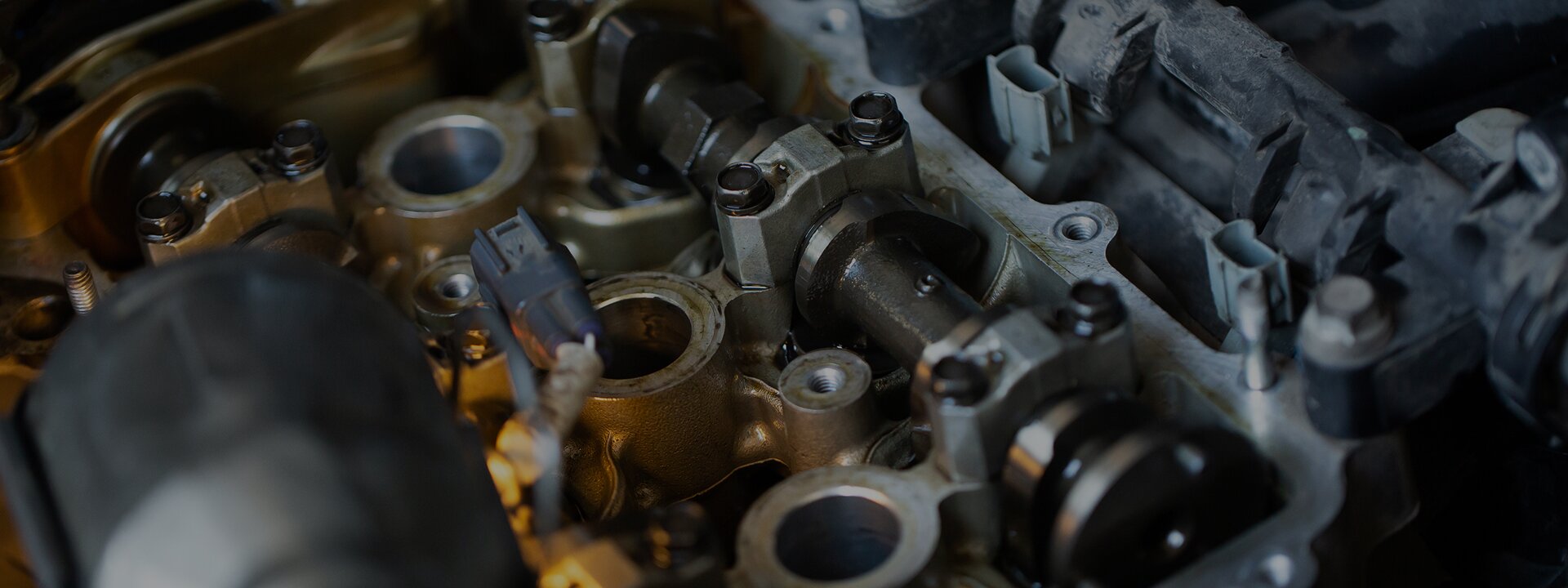
Feiya manufactures aftermarket cylinder heads compatible with Suzuki motorcycle, motocross, dual-sport, and ATV engine platforms. Each Suzuki-compatible head is cast from A356 aluminum alloy (ASTM B108), T6 heat treated, and CNC machined to valve seat, camshaft journal, and combustion chamber dimensions within ±0.005 mm (±0.0002 in.) of original Suzuki specifications. Our production spans air-cooled GN125 commuter engines to liquid-cooled GSX-R inline-4 sportbikes, with particular depth in Suzuki’s off-road and ATV segments — DRZ400, RM-Z motocross, and LTZ/LTR quad platforms — where cylinder head failure rates are highest and aftermarket demand is strongest.
Home > Aftermarket Suzuki Cylinder Heads
The table below outlines Feiya’s standard production capabilities and available customization options for aftermarket Suzuki cylinder heads and engine top-end castings.
Customization Capabilities Table:
| Customization Parameter | Feiya Customization Options & Standards | Suzuki Platform Relevance |
| Casting Material |
A356 aluminum alloy (ASTM B108 / JIS AC4CH). Custom alloy compositions available. |
A356 delivers the thermal fatigue resistance required across Suzuki’s engine range, from air-cooled single-cylinder GN/GS commuters to liquid-cooled Hayabusa inline-4s operating above 10,000 RPM. |
| Casting Process |
Low-Pressure Die Casting (LPDC) and Gravity Casting. |
LPDC is used for water-jacketed heads with complex internal passages (DRZ400, GSX-R series, SV650 V-twin). Gravity casting suits simpler air-cooled platforms (GN125, GS150, GZ250). |
| Heat Treatment |
T6 (solution treatment + artificial aging). Temperature curves recorded and archived per batch. |
Critical for Suzuki competition engines (RM-Z250, RM-Z450) and high-output platforms (Hayabusa, GSX-R) that sustain elevated thermal loads at sustained high RPM. |
| CNC Machining | 125+ machining centers: 3-axis, 4-axis, and 5-axis. Tolerances to ±0.005 mm (±0.0002 in.). | Suzuki’s DOHC heads with narrow included valve angles (e.g., DRZ400’s 28-degree layout) require multi-axis machining for accurate valve seat and camshaft journal positioning. |
| Two-Stroke Support | Dedicated 2-stroke cylinder head casting with squish band geometry control and dome profiling. | Direct support for Suzuki RM125, RM250, RM80, and RM85 two-stroke motocross platforms. |
| Surface Finish | Shot blasting, sandblasting, powder coating, or custom painting. Diamond-cut fin edges available. | Air-cooled Suzuki heads (GN125, DR series, Savage LS650) benefit from deep-fin casting with optional contrast finishing for exposed-engine models. |
| Quality Control | CMM dimensional inspection, 100% leak/pressure testing, spectrometer material verification. | Water jacket integrity is verified on every unit — critical for liquid-cooled Suzuki V-twins (SV650) and inline-4s (Hayabusa, GSX-R600/750) where Suzuki uses SCEM cylinder plating that demands precise head-to-block sealing. |
| Assembly Options | Bare head (casting + machining only) or fully assembled (valves, springs, retainers, stem seals installed). | Bare heads suit engine rebuilders and race shops doing custom valve work. Assembled heads provide drop-in convenience for distributors and repair workshops. |
Feiya produces aftermarket Suzuki engine heads compatible with a wide range of motorcycle, dual-sport, motocross, and ATV platforms. Our casting and CNC machining processes are designed to deliver a direct bolt-on fit to original Suzuki engine dimensions across all configurations listed below.


DRZ 400 cylinder head

RMZ 250 cylinder head

RM 125 VHM head
Suzuki’s single-cylinder engines dominate the off-road, dual-sport, and motocross segments. These platforms see the highest cylinder head replacement rates in the aftermarket due to the thermal stress of sustained high-RPM off-road riding and the mechanical abuse of competition use.
Dual-Sport & Enduro (4-Stroke):
· The DRZ400 is the most widely replaced Suzuki cylinder head in the aftermarket. Compatible replacement heads for DRZ400S, DRZ400SM, and DRZ400E — all sharing the same 398cc DOHC liquid-cooled engine with a compact 4-valve head, 36 mm intake valves, 29 mm exhaust valves, and a narrow 28-degree included valve angle. Also available: aftermarket heads for the DR350, DR125, XT225, and XT350 air-cooled dual-sport engines.
Motocross & Competition (4-Stroke):
· Replacement and performance cylinder heads for RM-Z250 and RM-Z450 four-stroke motocross engines. These platforms undergo frequent head rebuilds due to the extreme thermal cycling of race use. We maintain model-year-specific tooling — the RM-Z450, for example, saw significant head revisions between the 2005–2007 and 2008+ generations, with changes to port angles, water jacket layout, and combustion chamber geometry. Year-specific heads available for 2005, 2006, 2007, and 2008+ RM-Z450 and RM-Z250 platforms.
Motocross & Competition (2-Stroke):
· Heads for Suzuki’s two-stroke motocross lineage: RM125, RM250, RM80, and RM85. We support squish band geometry control and dome profiling for competition-level compression tuning. Custom billet replacement heads with application-specific squish geometry are also available for RM125 and RM250 race engines.


Suzuki GS 125 cylinder head
Commuter & Lightweight Street:
· Compatible aftermarket Suzuki engine heads for GN125, GS125, GS150, GZ250 (Marauder), and the Raider 150 underbone platform (Southeast Asian market). These are high-volume, cost-sensitive segments where casting consistency and stable supply matter more than exotic specifications.
Lightweight Cruiser:
· Replacement castings for the Savage (LS650) — Suzuki’s long-running single-cylinder cruiser, known for its exposed air-cooled cylinder head that doubles as a visual centerpiece of the engine.


SV650 cylinder head
Suzuki’s 90-degree V-twin architecture — used across the SV series — features Dual Spark Technology (two spark plugs per cylinder) and a naturally balanced crankshaft configuration that eliminates the need for a counter-balancer. Our aftermarket V-twin heads replicate the dual spark plug boss geometry and DOHC valve train layout to original Suzuki specifications.
SV650 / SFV650 Gladius (645cc, 90-degree L-twin, DOHC, 8-valve):
Replacement heads compatible with all SV650 generations from 1999 through current production. The SV650 head uses 31 mm intake valves and 25.5 mm exhaust valves with a shim-under-bucket adjustment system.
SV1000 / SV1000S (996cc V-twin):
Aftermarket heads for Suzuki’s larger-displacement V-twin sport platform.
DL650 V-Strom / DL1000 V-Strom:
Adventure-touring platforms sharing the SV-series V-twin engine architecture.


GSXR 600 cylinder head

Suzuki GS1000 cylinder head
Suzuki’s inline-4 cylinder heads are engineered for sustained high-RPM operation. The Hayabusa (GSX1300R) head, in particular, is the single most commonly replaced Suzuki cylinder head — reflecting both the model’s popularity in the performance and drag racing community and the age of Gen 1 and Gen 2 engines now requiring replacement castings.
Hypersport:
· Aftermarket cylinder heads compatible with the Hayabusa (GSX1300R) — Suzuki’s flagship. The Gen 1 Hayabusa (1999–2007, 1,299 cc) uses steel intake and exhaust valves. The Gen 2 (2008–2019, 1,340 cc) was revised with a more compact head, higher 12.5:1 compression ratio, and lightweight titanium valves. The Gen 3 (2021–present) features further refinements to the combustion chamber and ride-by-wire throttle integration. We produce heads compatible with all three generations, with generation-specific port geometry and compression ratio configurations.
Supersport:
· Replacement heads for GSX-R600 and GSX-R750 — Suzuki’s core supersport platforms. Both use DOHC 16-valve inline-4 configurations with Suzuki’s Twin Swirl Combustion Chamber (TSCC) design, which promotes controlled fuel-air charge rotation within the combustion chamber for more complete combustion at high RPM.
Classic Inline-4:
· Aftermarket castings for the GS1000 — Suzuki’s pioneering DOHC inline-4 from the late 1970s, supporting the vintage restoration and classic racing market.


LTZ 400 head
Suzuki’s sport ATV engines share core architecture with their motorcycle counterparts — the LTZ400, for example, uses an engine derived from the DRZ400 dual-sport platform. These quad engines operate under heavy load conditions (mud, sand, hill climbing) that accelerate cylinder head wear. The LTZ400 head is the highest-volume Suzuki ATV cylinder head in our production, driven by sustained aftermarket demand across the United States.
Sport ATV:
· Replacement heads for LTZ400 (QuadSport Z400) and LTR450 (QuadRacer). The LTZ400 shares the DRZ400’s DOHC 4-valve liquid-cooled architecture and has been in production since 2003, creating a large installed base of engines now requiring aftermarket head replacements.
Tell us your model and quantity — our team responds within 24 hours.
Get a Quick QuoteSuzuki engines — from the DRZ400’s compact DOHC single to the Hayabusa’s high-compression inline-4 — are designed around tight manufacturing tolerances and proprietary combustion chamber geometries (TSCC, Dual Spark). Producing an aftermarket head that meets these specifications requires controlled processes at every stage.

Reverse Engineering & Dimensional Capture

Sand Core Development & Casting

T6 Heat Treatment with Batch Traceability

Multi-Axis CNC Machining to Suzuki Specifications

100% Leak Testing & CMM Final Inspection
Over the years, we have provided long-term and stable cylinder head OEM manufacturing services to many motorcycle brands (including listed companies), and have become the largest motorcycle cylinder head manufacturer in Yueqing City, China.


Feiya is a seasoned OEM manufacturer with 17 years of expertise in aluminum die casting. While renowned for our multi-platform motorcycle cylinder heads, our capabilities extend to automotive structural parts and precision fuel dispenser components. We provide complete end-to-end support—from mold development and high/low-pressure die casting to complex CNC machining and rigorous testing—delivering ready-to-assemble solutions for diverse industries.

Operating within a 17,000+ m² facility, Feiya integrates the complete aluminum manufacturing cycle—from in-house mold design and die casting (HPDC & LPDC) to precision CNC machining. Equipped with over 30 advanced casting units and 125+ CNC centers, we maintain an annual capacity exceeding 5,000 tons. This vertical integration allows us to strictly control production timelines and guarantee stable, scalable supply for your critical OEM projects.

Quality is the core of our operations. Feiya is ISO 9001 certified and recognized as a National High-Tech Enterprise and a Technology-Based SME in Zhejiang. We adhere to rigorous quality management systems to monitor every process, from raw material inspection to final tolerance checks. These credentials reflect our commitment to technical innovation and prove our reliability as a trusted partner for global automotive and industrial clients.
For models in regular production — such as DRZ400, LTZ400, or GN125 heads — we offer flexible minimum order quantities suited to regional distributors. For custom projects that require new tooling, like a modified RM-Z450 head for a specific model year, the MOQ depends on mold complexity and development cost. Contact us with your target model and estimated annual volume for a specific quote.
Yes. We manufacture heads for Suzuki’s RM-series two-stroke motocross engines, including the RM125, RM250, RM80, and RM85. These heads are produced with controlled dome profiling and squish band geometry to maintain the compression characteristics that two-stroke race engines require. Custom billet replacement heads with modified squish geometry are also available.
Yes. We regularly reverse-engineer obsolete components for the vintage and restoration market. If you can supply a physical sample — even a damaged or worn one — we can laser-scan it, reconstruct the 3D model, and develop new casting tooling. We have completed this process for platforms including the GS1000 inline-4 and earlier DR-series dual-sport engines.
Bare heads are fully cast and CNC machined but ship without valvetrain components. They are intended for engine rebuilders who source and install their own valves, springs, and retainers. Assembled heads ship complete with valves, valve springs, retainers, and stem seals pre-installed, ready for bolt-on installation. Both configurations undergo identical 100% leak testing and CMM inspection.
Suzuki revises cylinder head designs between model year generations, sometimes significantly. For example, the RM-Z450 head changed substantially between the 2005–2007 and 2008+ production runs, with modifications to port angles, water jacket routing, and combustion chamber geometry. The Hayabusa head differs across Gen 1 (1999–2007), Gen 2 (2008–2019), and Gen 3 (2021+) in compression ratio, valve material, and chamber profile. We maintain dimensional reference data for all major model year variants and verify critical dimensions with CMM equipment before releasing any production batch.
The Kawasaki KLX400 shares its engine architecture with the Suzuki DRZ400. Our DRZ400-compatible heads are dimensionally suitable for the KLX400 platform. Contact us with your specific model year for confirmation.
Suzuki’s inline-4 sportbike engines — GSX-R600, GSX-R750, and the Hayabusa — use the proprietary Twin Swirl Combustion Chamber (TSCC) design. Unlike a conventional pent-roof combustion chamber, TSCC introduces a controlled dual-vortex swirl pattern in the incoming fuel-air charge. This accelerates flame front propagation during combustion, producing more complete burn at high RPM and allowing Suzuki to run higher compression ratios without detonation. For aftermarket manufacturing, replicating the TSCC geometry is critical. The combustion chamber profile, squish area dimensions, and the relationship between valve angles and chamber walls must be held within tight tolerances. Deviation from the original TSCC profile can result in localized hot spots, incomplete combustion, or abnormal detonation under load. Our CNC machining process uses 3D models derived from laser-scanned OEM heads to reproduce these chamber geometries with sub-millimeter accuracy.
Our engineers conduct a Design for Manufacturability (DFM) review, evaluating draft angles, wall thicknesses, and CNC machining allowances. We utilize casting simulation software to optimize the gating, runner, and overflow systems to prevent internal porosity and shrinkage.
Based on the approved DFM, we CNC machine high-durability steel dies (typically H13 tool steel) and precision sand core boxes for complex internal geometries, such as engine water jackets.
Initial cast samples undergo T6 heat treatment and multi-axis CNC machining. All dimensions, geometric tolerances, and material specifications are strictly verified via Hexagon CMM and spectrometry against the client's 2D drawings for final approval.
Upon FAI approval, we initiate stable volume production (MOQ 500 units) using our LPDC, HPDC, or gravity casting lines, ensuring strict batch-to-batch consistency and zero-leakage performance.
Reverse Engineering (No Original Data Available)
When original CAD data is unavailable, our engineering team converts physical OEM samples into production-ready tooling through a data-driven workflow
We evaluate 1-2 intact OEM samples and define critical parameters: exact aluminum grade (e.g., A356, ADC12), assembly datums, functional clearances, and pre-allocated stock for post-casting CNC machining.
We apply a micro-thin developer spray to the bare aluminum and use high-precision blue light optical scanners (such as ATOS) to capture a comprehensive 3D point cloud with a dimensional accuracy of up to ±0.01mm.
Raw point cloud data is imported into reverse engineering software (e.g., Geomagic Design X) to generate a polygon mesh. Our engineers reconstruct a fully editable parametric solid model (STEP/IGES), analyzing the original design intent and optimizing critical casting features rather than simply copying the geometry.
Because the physical OEM sample has already undergone metal shrinkage, our tooling engineers calculate and apply precise double-shrinkage compensation factors to the reconstructed digital model. We then finalize the gating systems and run casting simulations prior to machining the steel mold.


